HRT After Hysterectomy: My Honest Evernow Review for Surgical Menopause
Affiliate disclosure: This post contains affiliate links. If you sign up for Evernow through my link, I earn a $25 account credit and you get $25 off. I only share things I use myself, and my full disclosure is at the end of this post.
Quick answer for anyone skimming: if you've had a hysterectomy with your ovaries removed, you are in surgical menopause, and most people in that situation are offered hormone replacement therapy (HRT). I was undertreated for two years. Switching to Evernow, an online menopause clinic, got me to a dose that actually works, and my local estrogen arrives at my door. Here's the whole story.
My Story: 25 Years to a Diagnosis, Then a Body Without Ovaries
My symptoms started when I was five years old. I was diagnosed with endometriosis at 30, after 25 years of being dismissed, misdiagnosed, and told it was in my head.
If you have endometriosis, you may know that story by heart.
My deep excision surgery gave me answers, but it also cost me my left ovary. The endometrioma on it burst during surgery and damaged it beyond saving. I had my daughter at 33. By 35, my remaining ovary was failing, and I slid into menopause symptoms right after the postpartum period, when my body was already depleted.
After genetic testing, I made the decision to have a complete hysterectomy and oophorectomy. It was the right call for me. But nobody prepared me for what came next.
What Is Surgical Menopause (and Why It Hits So Hard)?
Surgical menopause is menopause that happens suddenly because both ovaries have been removed. Natural menopause lets your estrogen decline gradually over years. After an oophorectomy, it falls off a cliff overnight.
That's why hot flashes, sleep disruption, brain fog, mood changes, and vaginal dryness can feel so intense. It's also why many doctors recommend hormone therapy for people who go into surgical menopause young, unless there's a medical reason not to. Research on women who had hysterectomy and oophorectomy for non-cancer conditions reports that HRT is generally recommended for this group.
If you had your surgery for endometriosis, it's worth discussing your history directly with your provider, because doctors weigh the possibility of leftover endometriosis tissue when choosing a hormone plan. A good clinician will talk this through with you rather than brush it off.
Do You Need HRT After a Hysterectomy?
Not everyone does, and this is a personal medical decision. Whether you need HRT after a hysterectomy depends mostly on one thing: were your ovaries removed?
Hysterectomy only (ovaries kept): You stop having periods, but your ovaries may keep making hormones for a while. You may or may not need HRT, and some people still enter menopause earlier than expected.
Hysterectomy with oophorectomy (ovaries removed): You are in surgical menopause immediately, and HRT is commonly considered, especially if you're under the average age of natural menopause.
There are real pros and cons. Hormone therapy can bring dramatic relief from symptoms, and for younger people it's often discussed as a way to protect long-term health. There are also risks to weigh, which depend on your age, history, and family history. That conversation belongs with a licensed clinician who knows your full picture.
My First Two Years: Undertreated on an Estrogen Patch
For the first two years after surgery, I was only given an estrogen patch. No dose adjustments that really mattered, no conversation about local estrogen, and no one asking how I was actually feeling.
I kept telling myself this was just how life would be.
It wasn't. I was undertreated.
In July 2025, I had a major MCAS (mast cell activation syndrome) crash. I can't tell you hormones were the only cause, because chronic illness is never that simple. But I believe the lack of hormone balance was a contributing factor. Estrogen and mast cells interact, and being under-replaced after surgery didn't help my body stay stable. (This is my personal belief based on my experience and is not medical advice.)
How I Found Evernow
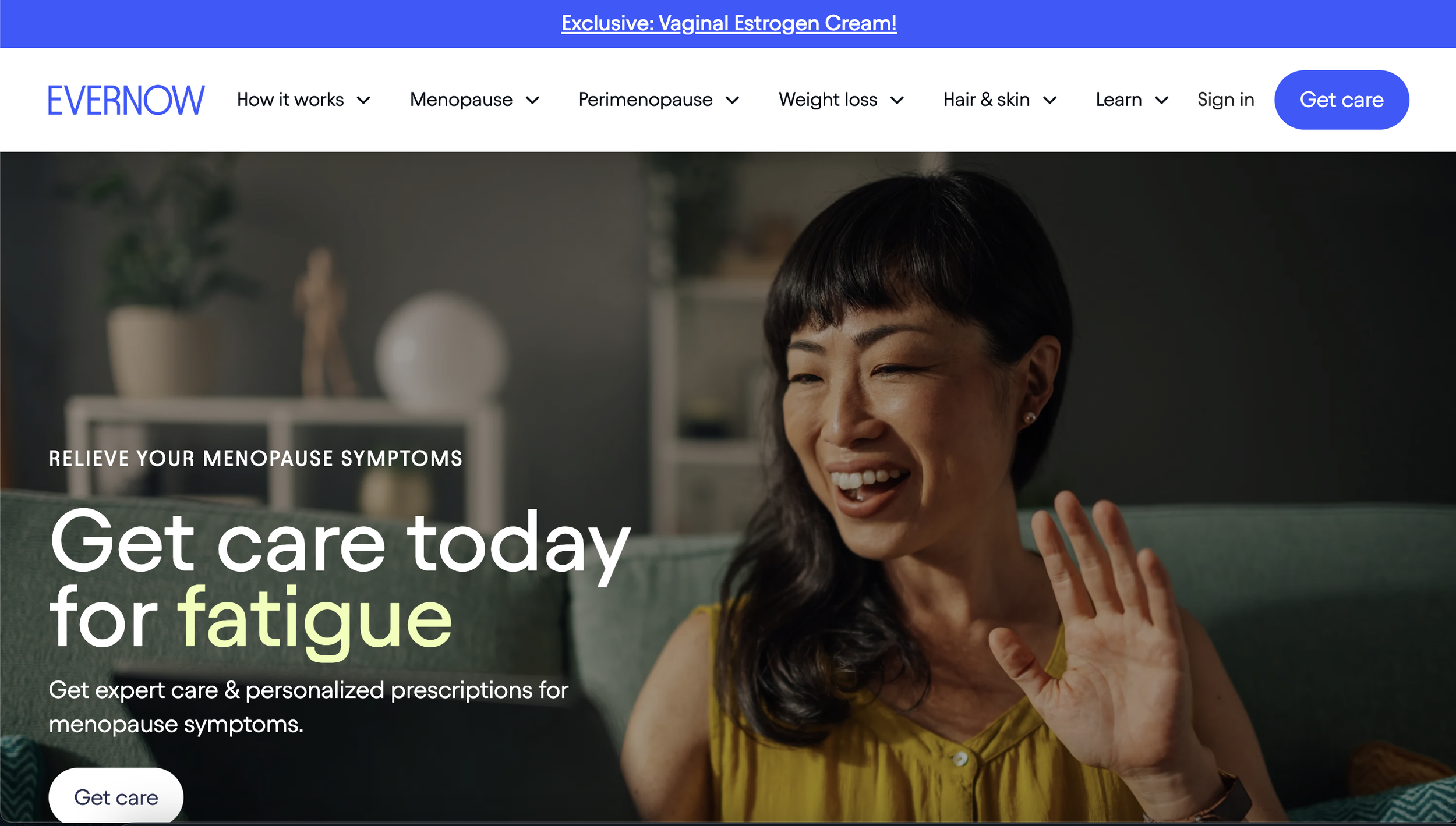
In December 2025, I decided to try Evernow, a virtual care clinic that specializes in perimenopause and menopause.
What I wanted was a clinician who understood that menopause after surgery isn't the same as menopause at 51, and who would adjust my plan instead of handing me one prescription and sending me on my way.
Here's what changed:
My estrogen patch dose was increased
I added local (vaginal) estrogen
I added progesterone
I finally felt more balanced, in a way I hadn't in two years
I don't want to oversell it. Everyone's body is different, and your plan will be your own. But for me, having a provider who treated my symptoms as real data made all the difference.
How Evernow Works: Visits, Membership, and Medication
This is the part that surprised me most. It's simple.
Two ways to get care:
Pay-per-visit: a one-time video visit with a menopause provider, no membership required. Per Evernow's site, video visits are $150 without insurance, and Evernow says they accept insurance for video visits from several major plans. Check your own coverage before booking.
Membership: ongoing care for long-term support. Evernow lists memberships starting at $35 a month, with 24/7 secure messaging, optional video visits, and ongoing access to your care portal and prescriptions.
I chose the 12-month membership at $35 a month, and I paid it in full up front.
Chat or video, your choice. You can message your provider through secure chat, or book a video visit when you want to talk things through face to face.
My local estrogen shows up at my door. Evernow advertises free vaginal estradiol for members on multi-month plans (3-month and 12-month) who medically qualify. Because I paid for my membership in full, my local estrogen was free for the year and was mailed straight to my home. I didn't have to go to a pharmacy or pay a separate bill for it.
A few honest notes:
Prescriptions are written only when your provider decides they're right for you.
Evernow's membership fee does not include the cost of other medications. Depending on your plan, some prescriptions can be filled at your local pharmacy and may be covered by insurance.
The free vaginal estrogen is tied to an active multi-month membership. If you cancel, that benefit ends.
Evernow says membership fees are generally FSA/HSA eligible, so check with your plan.
Pricing and benefits can change, so please confirm current details on Evernow's website before you sign up.
Why Local Estrogen Matters After Hysterectomy
Systemic HRT (like a patch) works throughout your body. Local estrogen works directly on vaginal and urinary tissue, with low absorption into the bloodstream.
After surgical menopause, vaginal dryness, pain with sex, and urinary changes are extremely common, and they're often under-discussed. Local estrogen is a separate treatment from your patch, and many people need both.
If no one has ever brought it up to you, that's a conversation worth starting.
Is Evernow Legit?
I can only speak to my experience: I worked with licensed, menopause-trained clinicians, got real adjustments to my plan, and had my medication delivered without hassle. Evernow also states that it serves more than 160,000 women.
That said, an online clinic is not right for everyone. If you have complicated medical needs, a history of hormone-sensitive cancer, or need an in-person exam, make sure your care team (including any specialists you already see) knows what you're taking.
What I Wish Someone Had Told Me After My Hysterectomy
Ask what kind of menopause you're in. Surgical menopause is different from natural menopause.
Ask about all the options, not just one product. Patches, local estrogen, and other forms exist for a reason.
Track how you feel and bring it to your provider. Symptoms are data.
Don't accept "this is just aging" at 35. You deserve a plan.
After 25 years of being dismissed, trust yourself. If something still feels off, keep asking.
Frequently Asked Questions
Do I need HRT after a hysterectomy?
It depends on whether your ovaries were removed. If both ovaries were removed, you go into surgical menopause right away and HRT is commonly considered. If your ovaries were kept, you may not need it immediately. Talk with a licensed clinician about your situation.
What is the difference between a hysterectomy and surgical menopause?
A hysterectomy removes the uterus. Surgical menopause happens when both ovaries are removed (oophorectomy), whether or not it's done during a hysterectomy.
Can I get HRT online after a hysterectomy?
Yes. Telehealth clinics like Evernow connect you with menopause-trained clinicians who can evaluate your history and prescribe if appropriate.
How much does Evernow cost?
According to Evernow's website, memberships start at $35 per month, and video visits are $150 without insurance. Medications are billed separately unless included in a plan benefit, such as free vaginal estradiol on multi-month memberships for those who qualify. Check Evernow's site for current pricing.
Does Evernow take insurance?
Evernow says it accepts insurance for video visits from several major national plans and that membership is generally FSA/HSA eligible. Coverage varies, so verify with your plan.
Is vaginal estrogen safe after a hysterectomy?
Low-dose local estrogen is widely prescribed for vaginal symptoms of menopause, but labeling and risks vary, so your provider should review your history before prescribing it.
Can low hormones affect MCAS or other chronic illness?
The relationship between sex hormones and mast cells is an area of ongoing research. In my own experience, balancing my hormones helped me feel more stable. Please discuss this with your own care team.
Ready to Try It?
If you're in surgical menopause and still feeling dismissed, you can start here: Take me to the Evernow Website. You'll get $25 off, and I'll receive a $25 credit.
You are not imagining it, and you don't have to figure this out alone.
Full Affiliate and Medical Disclosure
Affiliate disclosure: This post contains affiliate links. If you click my link and sign up for Evernow, you will receive $25 off, and I will receive a $25 account credit from Evernow as compensation for the referral. This does not cost you anything extra. I am not an employee of Evernow. The opinions here are my own and are based on my personal experience as a paying member; Evernow did not review or approve this post. Offer terms are set by Evernow and may change or expire at any time.
Not medical advice: I am a health coach, not your physician. This post shares my personal experience and general information only. It is not medical advice, diagnosis, or treatment, and it does not create a provider-patient relationship. Hormone therapy has benefits and risks that differ from person to person. Always consult a licensed healthcare provider before starting, changing, or stopping any medication. If you are experiencing a medical emergency, call 911.
Individual results vary. My results are not typical or guaranteed.
Sources referenced: Evernow's website (pricing, membership, and vaginal estradiol benefits); WebMD, "Surgical Menopause: Estrogen After Hysterectomy"; Langenberg et al., "Hormone replacement and menopausal symptoms following hysterectomy"; Behbehani et al., Journal of Minimally Invasive Gynecology, 2020.
Source Links: Evernow membership, Evernow FAQ, Evernow vaginal estrogen, WebMD on surgical menopause, Langenberg et al., Behbehani et al., FTC affiliate disclosure summary
Last updated: October 7, 2026. Pricing and benefits verified against Evernow's website on this date.
Personal experience, not medical advice. Always consult your own licensed provider.